


Some sporting brands are created in marketing departments.
Others are forged through the people who wear them, the victories they witness and the stories they leave behind.
Stylo Matchmakers belongs to the second group.
Launched in 1966 by Barratts Shoes from its Footshape Boot Works in Britain, Stylo Matchmakers was developed into an international sporting name under the leadership of entrepreneur Paul Ziff.
Working alongside pioneering sports-marketing figure Mark McCormack, Ziff saw an opportunity to build something more exciting than another conventional footwear company. His ambition was to create a bold, personality-driven British sports brand—a kind of “rock and roll” alternative to the industry establishment.
Stylo would go on to leave its mark across football, tennis and golf, worn by some of the most recognisable athletes of the twentieth century.
Worn by Sporting Royalty
Stylo Matchmakers did not build its reputation through advertising alone.
It earned it on the pitch, the court and the course.
Tennis great Rod Laver wore Stylo footwear during an era in which he established himself as one of the finest players the sport has ever produced. Golfing icon Arnold Palmer, whose charisma helped transform the international profile of golf, was another celebrated figure associated with the brand.
Football provided Stylo with its most enduring legacy.
Pelé, the game’s first truly global superstar, wore Stylo Matchmakers boots. So did George Best, the Belfast genius who brought rock-and-roll glamour onto the football pitch before the phrase “personal brand” had entered the sporting vocabulary.
They were joined by generations of British football greats, including Kevin Keegan, Billy Bremner and Trevor Francis.
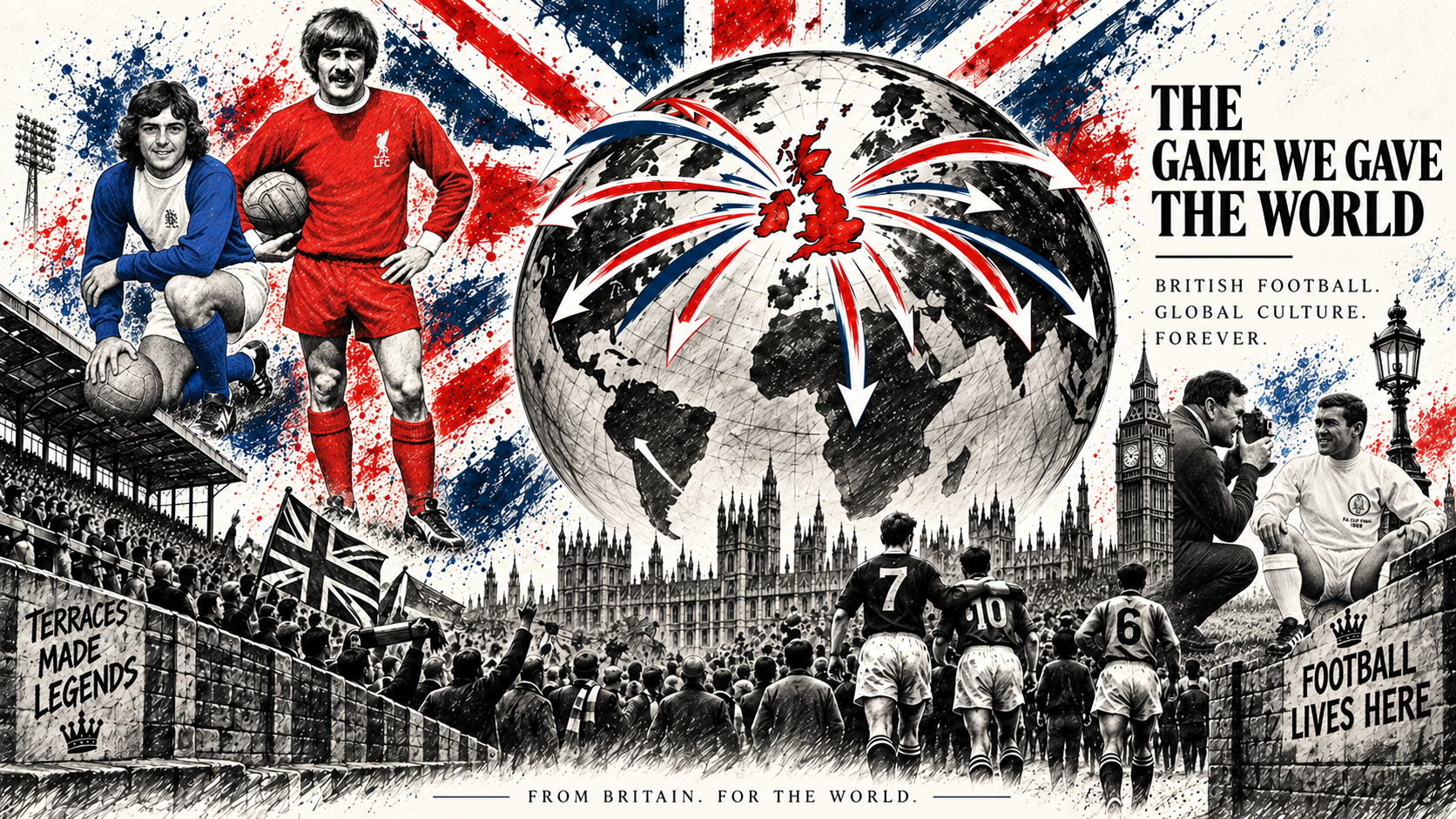
Stylo also became closely associated with some of football’s most influential managers and teams. Its presence during the eras of Bill Shankly and Brian Clough connected the brand to a period when British clubs were establishing themselves among the most formidable forces in world football.
These were not manufactured connections created decades later.
Stylo Matchmakers was there.
A Great Name Returns
Like many independent British sporting names, Stylo eventually disappeared from the position it once occupied.
Its influence remained visible in archive photographs, old football programmes and the memories of supporters, but the brand itself risked becoming another important piece of British sporting history left behind by an increasingly globalised industry.
British entrepreneur and former FA-registered intermediary Scott “Matchmaker” Michaels believed the story was not finished.
In 2017, Michaels revived Stylo Matchmakers with a clear purpose: to protect its history while making the brand relevant to football again.
The relaunch was built around the Heirship Collection—football boots inspired by important designs and moments from Stylo’s past, reconstructed for the demands of the modern game.
This was not an exercise in reproducing obsolete footwear or attaching an old badge to a generic product.
The idea was to retain the visual identity, individuality and attitude that had made Stylo distinctive while introducing modern materials, construction and performance features.
The result was a collection that connected two generations: those who remembered Stylo’s original players and younger footballers searching for something beyond the predictable offerings of multinational brands.
Football Accepted Stylo Back
A heritage brand cannot survive on history alone. It has to prove that it still belongs in the modern game.
One of the defining moments in Stylo’s revival came at the 2018 Kanu Cup at The Hive in Barnet.
The charity match brought together an extraordinary collection of former Premier League and international footballers. Among the players, coaches and managers involved were Nwankwo Kanu, Arsène Wenger, Robert Pirès, Michael Essien, Sol Campbell, Jens Lehmann, Steve McManaman and Louis Saha.
Stylo Matchmakers boots were placed inside a dressing room occupied by players who had won league titles, domestic cups and major European honours.
Then they were worn.
For Michaels, that moment represented more than product exposure. One year after the brand had been revived, Stylo was back where its reputation had originally been built: on the feet of professional footballers.
Football had accepted it back.
Against Modern Football
Under Michaels’ direction, Stylo Matchmakers has adopted an unapologetic position Against Modern Football.
That does not mean opposing progress, technology or ambition.
It means questioning a football economy in which enormous endorsement contracts manufacture influence, global corporations dictate fashion and supporters are routinely expected to absorb the cost.
Stylo does not pay professional footballers to pretend that contractual obligation is personal preference. It wants its products to be worn because players value the boots, understand the story or believe in what the brand represents.
That makes growth harder.
It also makes every genuine connection more valuable.
Stylo’s position is not anti-player. Footballers have every right to profit from their ability and influence. The objection is to a culture that disguises paid promotion as authentic choice while encouraging young players and parents to believe that performance or status can be purchased through the right logo.
The Stylo philosophy is more straightforward:
A football boot should earn its place on a footballer’s feet.
Heritage Is a Responsibility
Many companies use heritage as decoration.
For Stylo Matchmakers, it creates an obligation.
The names associated with the brand—Paul Ziff, Pelé, George Best, Kevin Keegan, Billy Bremner and Trevor Francis—cannot simply be reduced to images on a mood board. Their connection to Stylo must be documented, respected and carried forward with purpose.
That is why storytelling has become central to the revived brand.
Stylo is rebuilding an overlooked chapter of British sporting history while creating products capable of writing the next one. Every archive photograph, player story and surviving pair of boots adds another piece to a history that might otherwise have been lost.
Still Playing
Stylo Matchmakers cannot outspend the corporate giants controlling modern sportswear.
It does not need to.
It possesses something considerably harder to manufacture: an authentic place in sporting history, built through legendary players and preserved by people who still believe football should mean more than sponsorship agreements and quarterly results.
The brand that once walked beside Rod Laver, Arnold Palmer, Pelé and George Best is moving forward again.
Not as a replica of what it was.
Not as nostalgia dressed up as progress.
But as an independent British challenger carrying the finest parts of its past into the future.
The name survived.
The story continues.
Stylo Matchmakers is still playing.
