

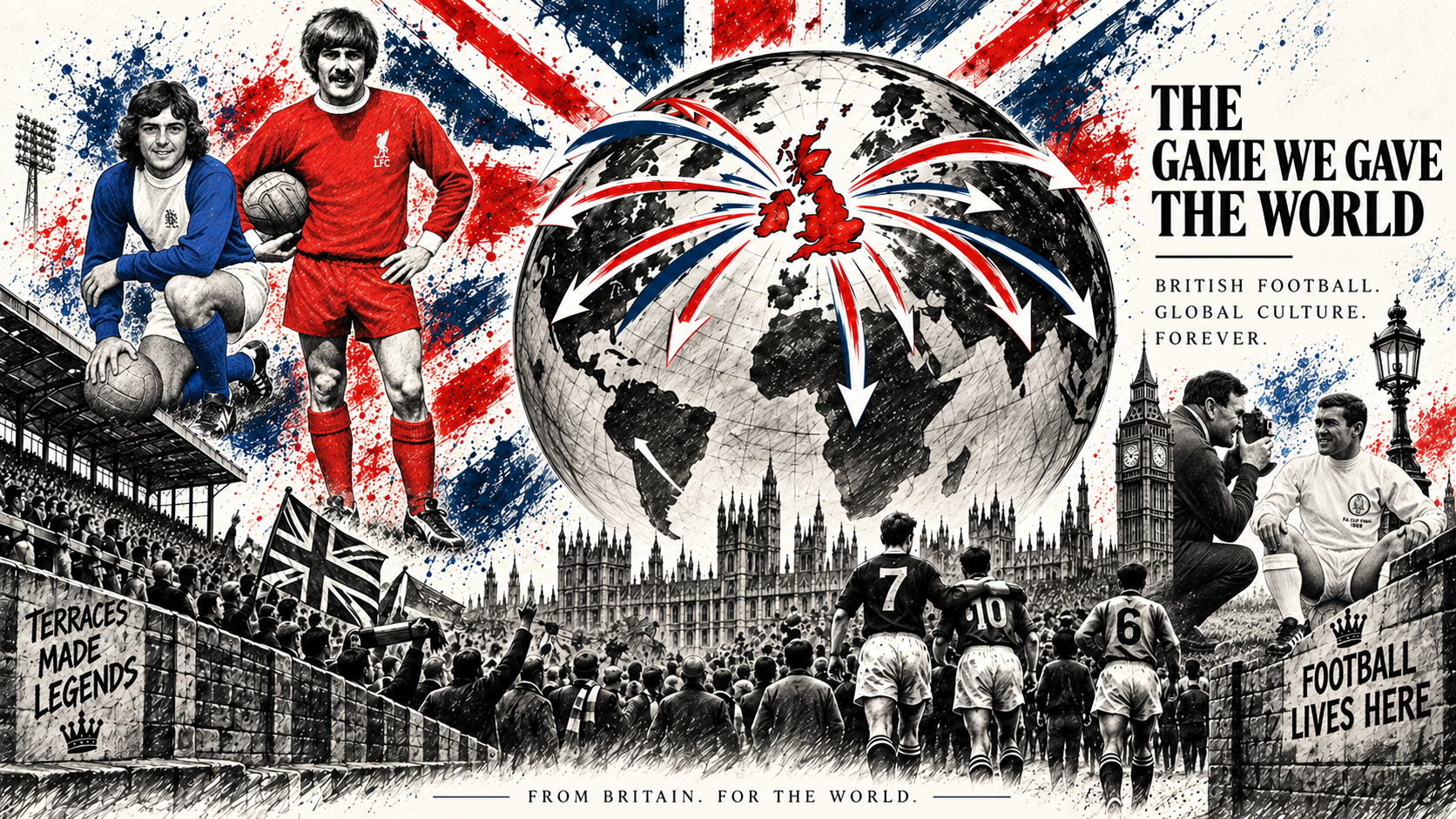

Modern football has become exceptionally good at selling an image.
Boot contracts manufacture loyalty. Sponsorship deals disguise advertising as personal preference. Players are paid to promote products that supporters are then encouraged to buy at inflated prices.
Scott “Matchmaker” Michaels believes football deserves something more honest.
A British entrepreneur and former FA-registered intermediary, Michaels has spent more than two decades building businesses, developing brands and working around professional football. That experience has given him a clear view of how the modern game operates—and who ultimately pays for its excesses.
Usually, it is the supporter.
His response has been to rebuild Stylo Matchmakers, one of British football’s great heritage brands, around a different principle:
The product must earn its place. Belief cannot simply be bought.
A British Football Original
Stylo Matchmakers was created by Leeds entrepreneur Paul Ziff and became one of the most recognisable names in British football.
Its boots were worn by some of the greatest players the game has produced, including Pelé, George Best, Kevin Keegan, Trevor Francis and Scottish icon Billy Bremner.
That history matters—but Michaels has never wanted Stylo to become a museum piece.
Reviving the name was not about manufacturing nostalgia or borrowing credibility from the past. It was about preserving what made the brand significant in the first place: distinctive British design, genuine football heritage and the courage to compete with much larger companies.
Michaels’ task has been to protect that legacy while rebuilding Stylo for a new generation.
Football Before Fashion
The modern boot market is dominated by multinational corporations with enormous sponsorship budgets. The biggest names are paid vast sums to wear particular products, creating the impression that professional players have selected those boots purely on performance.
The reality is more complicated.
Contracts, agents and commercial obligations frequently influence what players wear and promote. Young footballers then imitate their heroes, while parents and supporters absorb the cost through increasingly expensive products.
Michaels rejects the idea that this should be accepted without question.
Stylo Matchmakers does not want to purchase artificial credibility through extravagant endorsement contracts. Its position is simpler: create football boots worthy of being worn and allow the product, its heritage and the people who genuinely believe in it to speak for themselves.
That is not opposition to footballers earning money. Players have every right to benefit from their talent and influence.
It is opposition to a system that presents paid promotion as independent choice—and then expects supporters to finance it.
Against Modern Football—But Not Against Progress
Stylo’s philosophy is sometimes described as anti-modern football. That does not mean resisting innovation or pretending the game should be frozen in the 1970s.
It means challenging the parts of modern football that have stopped serving the people who sustain it.
Michaels believes football brands should be transparent about what they represent. They should invest in the quality of their products, respect the intelligence of supporters and understand that heritage creates a responsibility—not merely a marketing opportunity.
Under his direction, Stylo combines its historic identity with modern materials, contemporary manufacturing and a broader cultural mission.
The aim is not to recreate the past.
It is to carry its best values forward.
Rebuilding More Than a Brand
For Michaels, Stylo Matchmakers represents something larger than football boots.
It is proof that an independent British brand can challenge a market dominated by global corporations. It demonstrates that history can be protected without being exploited and that commercial ambition does not have to come at the expense of principle.
Most importantly, it gives supporters a genuine alternative.
Stylo does not claim to be bigger than the industry giants. It does not possess their budgets, their distribution networks or their armies of sponsored athletes.
But it has something money struggles to manufacture: an authentic place in football history and a clear reason for existing today.
Scott Michaels is not attempting to outspend modern football.
He is trying to remind it what it has forgotten.
Through Stylo Matchmakers, he is preserving the legacy established by Paul Ziff while building an independent football brand founded on identity, honesty and substance.
No manufactured loyalty.
No borrowed belief.
Just a British football original, still playing by its own rules.
